

While it's essential for little ones to gradually discover the house and their surroundings, a bit of care is still necessary when they explore.
The right moment to start preparing at home is before the baby can sit on their stomach! It would be ideal to start by making a general assessment and taking measurements, so you have enough time to think.
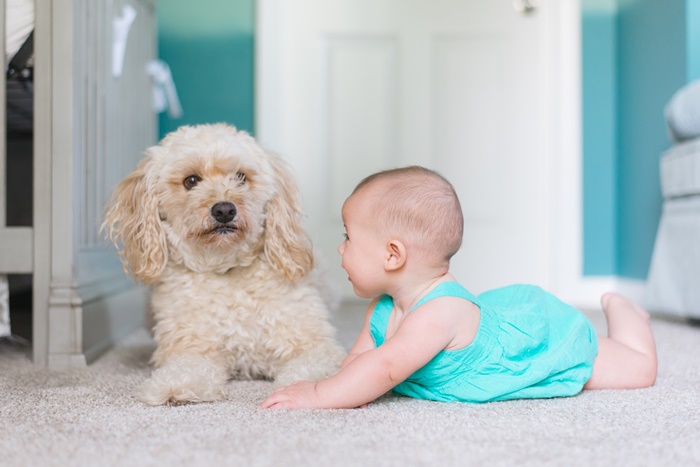
As general guidelines, experts recommend limiting access to high-risk areas (for example, bathroom and kitchen). It is essential to evaluate the situation from a baby's point of view - this means exploring the house on all fours or "on four legs," exactly as a toddler would. Many details can be discovered at this level, such as power cords hanging under or behind furniture that are not visible from above. Be aware also of small objects that can easily be picked up by hand or put in the mouth, babies will be tempted by these (nasturi, baterii, magneți). Finally, limiting access to toxic substances - here we do not only include cleaning products but also houseplants that are toxic (there are multiple online information on this topic).
We ensure the following first things.
If you're just starting out, the entire process may seem overwhelming, but there are products, rules and steps that can help you and guide you.
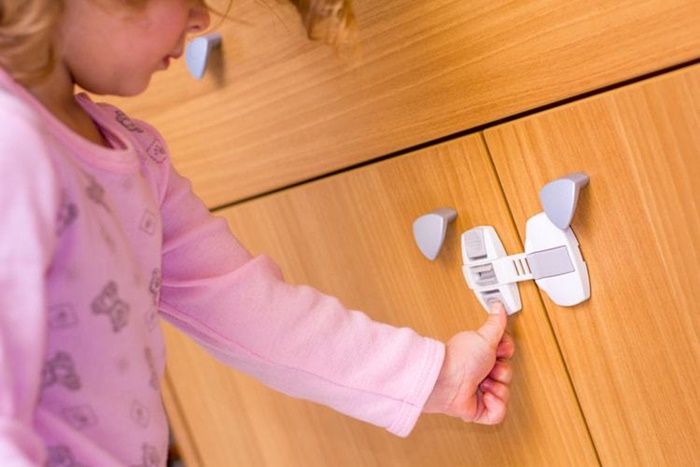
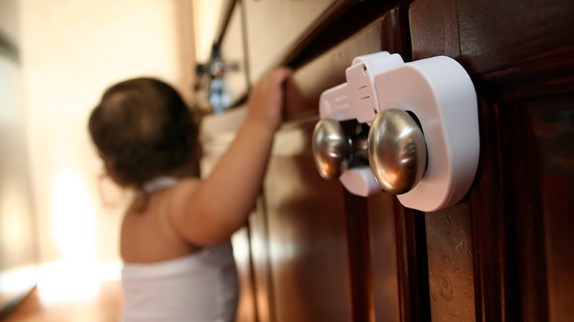
You've probably heard of baby safety latches! These are indeed useful, but be sure to buy ones made from quality materials that won't easily give way. For any eventuality, move hazardous products like cleaning chemicals to other places at a height so they're not within reach if the baby manages to grab the latch or if it gives way due to frequent use.
The safety gates/doors are useful when you want to completely prevent access to a room or if you live at home and have stairs. In addition to the same material-related precautions, you must consider not presenting a danger for children (for example, having thin bars between which the baby can get its head or limbs stuck).
The plugs have holes that are very tempting for babies. To avoid any danger, we recommend the use of safety caps for plugs that are quality, gliding, not plastic protections that are inserted into the plug holes – these latter can be removed and pose a risk of suffocation for the baby.
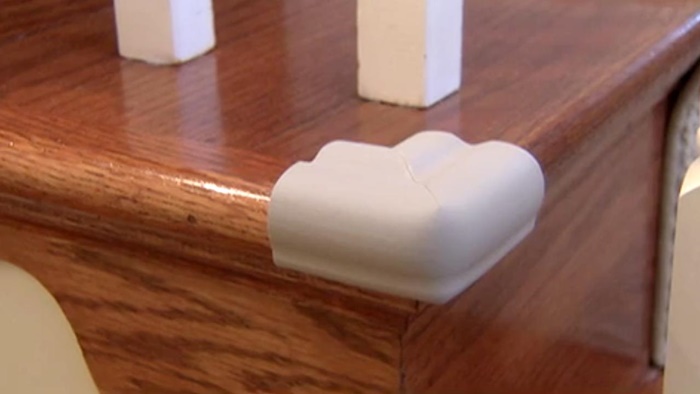
Furniture can be a hazard in itself! First of all, large drawers should be fixed with safety latches. The furniture must be anchored, because when they start to stand up on their feet, babies lean against whatever is nearby, and if they pull harder on the unsecured bodies of furniture, they can get seriously hurt. In the third place, very sharp corners can be covered with the help of soft foam protectors!
How do we baby-proof each room?
Baby monitor – Crib It must be comfortable and safe. The changing table mattress must be anchored well so that it does not tip over. The carousel above the crib should be at a distance, so that the baby cannot reach and pull it, and plush toys should not be in the crib because they present a risk of suffocation.
The living room, dining room, and bedroom – the tables and furniture must be secured. Bookshelves look like ladders so they need to be well anchored in case they become tempting for babies. The TV will spark curiosity in toddlers so it needs to be fixed firmly and never placed on a higher dresser where it could fall on the baby. Electrical cords will be gathered, passed behind the furniture bodies, tightened and as much as possible inaccessible to small children.
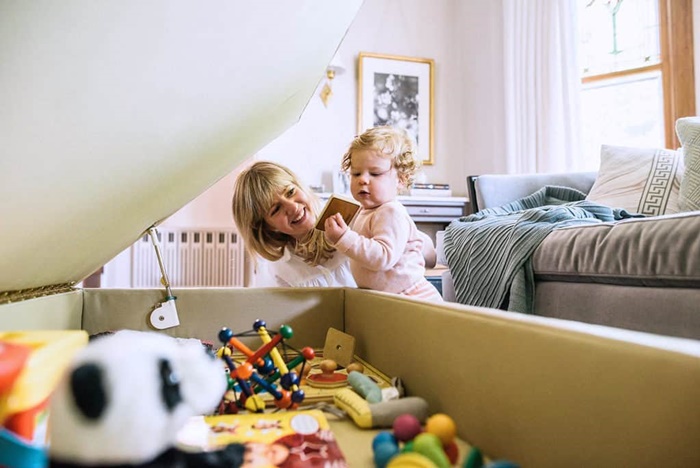
Kitchen – it's okay to allow access to a few cupboards with pots or cardboard boxes with flour paste, for example (the baby will adore exploring and rearranging). They will be moved up high and into locked cupboards: cleaning products, sharp objects, any type of glassware, plastic bags, alcohol or tobacco products, any type of vitamins and dietary supplements. Special care will be taken with the stove – if there are protective products that fit your home model, we recommend purchasing and using them. Some people choose induction stoves for greater safety. The refrigerator magnets, especially the small ones, are hazardous, so they must be moved up higher. Small appliances not in use should be stored, as they represent a temptation (bread toaster, mixer, bread maker, etc.).
Bath – all products with potential risk such as cleaning products and personal hygiene products should be stored tightly, if possible batteries with thermostat will be purchased to ensure an optimal water temperature for the bath.
Diverse areas of the house – plants will be placed at a height, they will be compacted: food for pets, batteries, medical kits, small objects (figurines, shells, etc). Carpets will be fixed with the help of anti-slip sheets, handles will be secured. Doors will be equipped with stoppers so that little ones do not get their fingers caught when they slam due to the current or when pushed.
Although it may seem like a complicated process, preparing the house for babies is not at all difficult. This takes place over several months, the products mentioned can be found in most hardware stores or online and during explorations other potential problems may also be discovered. You don't have to be afraid, anyway the baby is always supervised! But remember that prevention is key, so if you follow the basic guidelines, you won't have any unfortunate incidents.